
Behavior-driven development (BDD) testing is a way of writing test scenarios in plain, structured language, using a Given/When/Then format, so developers, QA engineers, and business stakeholders can read and agree on the same specification before a feature ships. Tools such as Cucumber then run those scenarios as automated tests against the real product.
Whether your team needs BDD testing comes down to one question: should someone who has never written code be able to read your tests? With BDD, a product manager can read “Given a logged-in user, When they add an item to the cart, Then the cart total updates” and know exactly what is being checked, and spot what is missing. That readability has a cost. Every plain-language line needs code behind it, and someone has to keep the two in sync as the product changes.
BDD is now common practice in testing teams. In the State of Testing 2024 survey by PractiTest and Tea-time with Testers, BDD adoption rose from 19% of respondents in 2022 to 26% in 2024, slightly ahead of test-driven development at 23%, and 92% of respondents worked in Agile or Agile-like models.
This guide explains the Given/When/Then structure, how BDD tooling plugs into automated testing, how BDD compares with TDD, and when the extra overhead pays off.
The Given/When/Then Structure in BDD
Every BDD scenario follows the same three-part shape:
- Given sets the starting state: who the user is, what data exists, what screen they are on.
- When describes the single action or event being tested.
- Then states the expected outcome the business cares about.
And and But extend any of the three when a step needs more than one line. The syntax is called Gherkin, and it lives in plain-text .feature files that anyone on the team can open. The Gherkin reference lists the full keyword set.
Here is the cart example written as a real scenario:
Feature: Shopping cart

  Scenario: Adding an item updates the cart total
    Given a logged-in user with an empty cart
    When they add a $25 notebook to the cart
    Then the cart shows 1 item
    And the cart total is $25.00
A product owner can confirm that this is the intended behavior, a developer can build against it, and a QA engineer can automate it, all from the same text.
The skill lies in describing behavior instead of clicks. “When they click the button with id add-to-cart” ties the scenario to today’s interface and breaks with the next redesign. “When they add a $25 notebook to the cart” survives a redesign and still reads as a business rule. Scenario Outlines take this further: one scenario plus a table of example values covers ten discount codes or five user roles without ten copies of the same steps.
That single, readable source of truth targets a common weakness. The same State of Testing 2024 survey found that in 60% of organizations, test cases are not well written and maintained, with duplication and poor maintenance as the usual causes.
How BDD Testing Tools Actually Work
BDD tooling sits on top of your test automation framework and hands it the actual work. The scenarios describe what the product should do, and the framework underneath carries out each step against the browser, mobile app, or API. Teams that already have an automated suite can usually add a BDD layer gradually, one business flow at a time, and keep the tests they already have. A BDD setup has three layers:
Feature files
Scenarios in Gherkin (Given/When/Then)
Product owner, QA, and developers together
cart.feature, checkout.feature
Step definitions
Code that maps each plain-language step to actions
QA automation engineers or developers
Java, JavaScript, Python, or C# functions
Automation framework
The engine that drives the browser, app, or API
QA automation engineers
Selenium, Playwright, Appium, REST clients
Cucumber is the most widely used BDD tool, with implementations for Java, JavaScript, Ruby, and other languages. Behave covers Python, Reqnroll (the successor to SpecFlow) covers .NET, and CodeceptJS supports Gherkin scenarios for JavaScript teams. For API work, Karate uses Gherkin-style syntax directly, which is one reason it often comes up when teams compare Karate with REST-Assured.
When Cucumber runs When they add a $25 notebook to the cart, it finds the matching step definition, which in turn calls Playwright or Selenium to perform the action. This layering has two practical consequences:
- BDD inherits the quality of the framework underneath. Flaky locators or slow test environments stay flaky and slow behind a readable scenario.
- Non-coders can contribute to test design. In the 2024 survey, 42% of respondents said they don’t feel comfortable writing automation scripts. Plain-language scenarios let those testers, and product people, define what gets automated while engineers own the step code.
BDD scenarios work as a readable front end to automated functional testing: they check that features behave the way the business expects, end to end.
BDD vs TDD: What's the Difference
BDD grew out of test-driven development in the mid-2000s, when Dan North began describing tests as behaviors to make TDD easier to teach and discuss. The two now solve different problems.
In test-driven development, a developer writes a small failing unit test, writes just enough code to make it pass, then refactors. The tests live in code and speak to other developers. BDD moves the conversation up a level, to behavior a customer or stakeholder would recognize.
Core question
Does this unit of code work correctly?
Does the feature behave the way the business expects?
Who writes the tests
Developers
Product, QA, and developers together
Who can read them
Developers
Anyone on the team
Level
Unit, sometimes integration
Acceptance, end-to-end, API
Language
Programming language
Gherkin (Given/When/Then)
Typical tools
JUnit, pytest, Jest, NUnit
Cucumber, Behave, Reqnroll, CodeceptJS
Main payoff
Clean, well-designed code with fast feedback
Shared understanding and fewer requirement misunderstandings
Main cost
Developer discipline and time per feature
Scenario workshops plus step-definition maintenance
Many teams use both: TDD for the internals, BDD for the handful of business flows that stakeholders need to sign off on. The steady rise of both practices points to “all team testing” gaining ground, with developers, QA, and product sharing responsibility for quality across R&D teams.
When BDD Testing Is Worth the Overhead
BDD adds real work on top of automation. Someone has to run short scenario sessions with product, development, and QA (often called “three amigos” meetings), keep a shared vocabulary of steps so scenarios don’t drift into near-duplicates, and maintain the step definitions as the interface changes. If nobody outside engineering reads the scenarios, that work buys nothing.
BDD tends to pay for itself when:
- Business rules are complex or disputed. Pricing, eligibility, permissions, and refund logic are where “that’s not what we meant” bugs come from.
- Non-technical people sign off on behavior. Product owners, compliance leads, or a client’s acceptance team can review scenarios directly.
- Manual QA engineers need to contribute to automation without becoming full-time programmers.
- You need living documentation. Scenarios that run in CI/CD show what the product does today, which helps onboarding and audits.
It is usually the wrong call when:
- The suite is developer-only: unit tests, internal libraries, infrastructure code.
- The product is a fast-changing prototype and behavior shifts weekly.
- There is no stable automation baseline yet. Fix the framework first, then add the readable layer.

The underlying argument is about communication. In PractiTest’s 2025 survey, communication skills rose from 59% in 2024 to 75% in 2025, becoming the top skill testers said they need, which the authors link to testers working closely with cross-functional Agile and DevOps teams. BDD turns that collaboration into a concrete artifact, and a misunderstanding caught in a scenario review costs far less than one caught in production. That cost curve is the same reason behind the importance of QA starting early in development.
How QAwerk Uses BDD on a Real Project
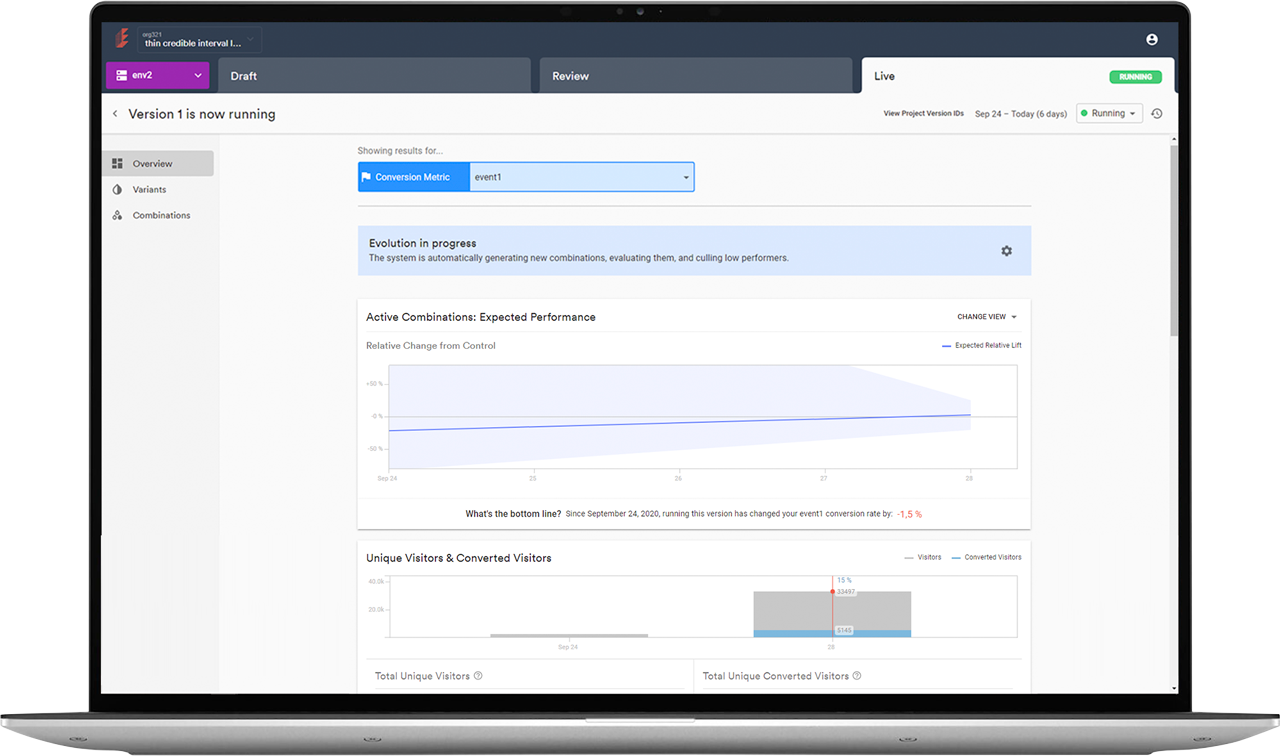
On Evolv, an AI-driven digital growth optimization platform, the client’s team already used CucumberStudio as their BDD collaboration tool for manual test cases. QAwerk’s automation ran on CodeceptJS with Puppeteer. Rather than force one tool to replace the other, our engineers built a small generator that produces the glue code between CucumberStudio and the CodeceptJS project in both directions, with scenarios running in the CI/CD pipeline.
The result made automation accessible to the whole QA team:
- Manual QA engineers build new scenarios from a library of more than 100 Action Words, with minimal onboarding.
- When a locator or step order changes, they fix it by editing steps in CucumberStudio instead of pushing code changes.
- Low-level steps are gradually refactored into business-level Gherkin phrases that Evolv’s team can read.
It worked because both teams operated as one. Evolv’s team prepared debugging documentation while we wrote test cases, and we joined at whatever stage the platform was in, from the older web app through the new product. If you are unsure whether BDD fits your project, tell us what you’re building and we’ll give you a straight answer.
Is BDD Testing Right for Your Team
BDD earns its overhead when it closes a real communication gap between the people who build software and the people who decide what it should do. It solves a different problem from TDD, and plenty of strong teams use one, the other, or both.
QAwerk’s automation engineers can layer Cucumber or another BDD tool on top of the framework that already suits your stack, so you get readable scenarios without rebuilding your test suite. If you’d rather have a dedicated testing team that writes scenarios with your product owners and keeps them running in CI, that is how we usually start.
FAQ
What is BDD testing in simple terms?
BDD testing means writing tests as short, plain-language scenarios that describe how a feature should behave, using Given/When/Then. Developers, QA engineers, and business stakeholders all read the same scenarios, and tools like Cucumber run them as automated tests.
What does Given When Then mean in BDD?
Given describes the starting state, When describes the action the user or system takes, and Then describes the expected result. For example: Given a logged-in user, When they add an item to the cart, Then the cart total updates.
Is BDD better than TDD?
Neither is better overall. TDD helps developers design and verify code at the unit level. BDD helps technical and non-technical people agree on how a feature should behave.
Is Cucumber a test automation framework?
Cucumber is a BDD tool that reads Gherkin scenarios and connects each step to code. It does not drive a browser or app by itself, so it is usually paired with a framework such as Selenium, Playwright, or Appium.
Can you use BDD without test automation?
Yes. Many teams start by using Given/When/Then scenarios as acceptance criteria or manual test cases, then automate the most valuable ones later.
See how we tested an AI digital growth solution, increasing regression-testing speed by 50%