
Shipping a flawless game today goes beyond brilliant design or addictive gameplay. You also need to make sure your release doesn’t crash, glitch, or disappoint. Whether you’re an indie studio with a tight launch window or a funded gaming startup scaling fast, building the right QA team at the right time is a game-changer literally.
In this article, we break down which game testing specialists you need for each stage of development, when to scale your QA efforts, and how a structured team helps you avoid bad reviews, wasted spend, and broken player trust.
Why Specialized QA Teams Matter in Game Development
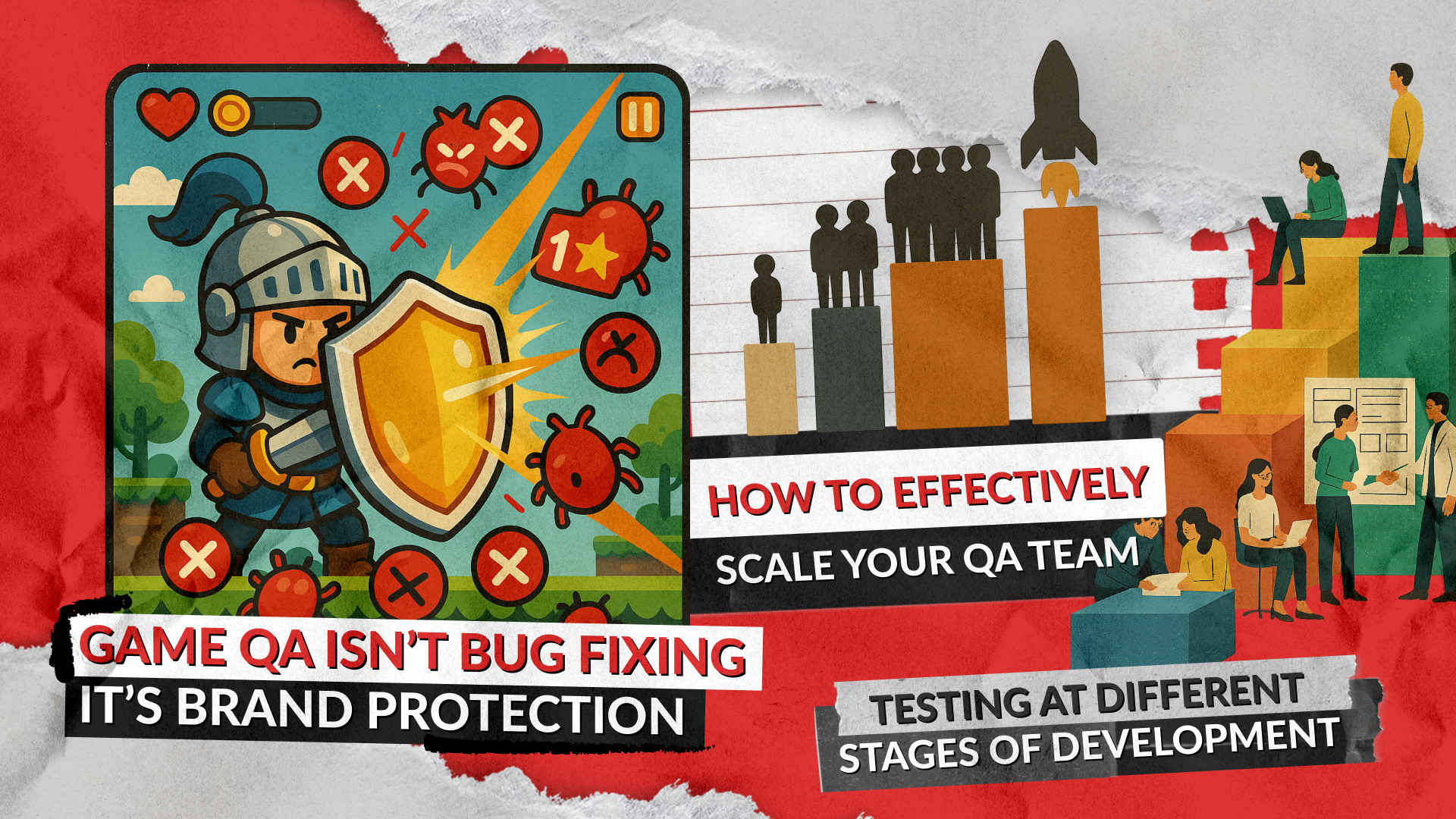
Game QA is not just bug fixing. It’s risk mitigation, brand protection, and experience polishing. Unlike generic software testing, game QA demands specialists who understand everything from frame rate benchmarking to joystick drift to localization bugs in console ports.
Having the right game QA testers on your team helps you avoid those outcomes, not react to them.
Team 1: Prototype & Early Alpha Stage
Goal: Identify blockers in core mechanics and game logic before you invest in polish.
Who You Need:
- Functional Tester: Validates if early mechanics (like jump, inventory, physics) work as expected. Learn how we found 3+ functional errors in the Howl for iOS strategy game.
- Exploratory Tester: Plays like a real user to find edge-case issues, especially useful in open-world or sandbox games.
- QA Lead or Test Strategist (optional): Helps define early test documentation and test plans, even before automated tests are in place.
Example: At QAwerk, we performed exploratory testing and UI checks during the early phases of Human Park’s avatar-driven web3 experience. This helped catch early UX blockers before visual assets were finalized.
Team 2: Late Alpha to Closed Beta
Goal: Validate gameplay loops, core UX, and progression systems.
Who You Need:
- Functional Testers: Scale up your functional testing team to cover new modules—combat, crafting, skill trees, etc.
- Performance Tester: Responsible for benchmarking FPS, memory usage, and load behavior, with expertise in multiplayer game performance.
- Regression Tester: Ensures new builds don’t break what’s already fixed.
Additional tip: This is when automation starts to pay off, especially for repetitive tasks like login validation, inventory checks, or tutorial replays. If you want a team with experience in mid-air performance testing, you’re in the right place. Check out our case study for the Highrise City game, where we improved stability and optimized the game process.
Team 3: Open Beta or Pre-Launch
Goal: Eliminate critical bugs that would harm monetization, retention, or user reviews.
Who You Need:
- Usability Tester: Focuses on frustration points—bad level design, confusing menus, inconsistent feedback loops. You can find out how we uncovered the bad transition between levels in our Bug Crawl for the Plug Head game for iOS.
- Localization Tester: Ensures that in-game text doesn’t break the UI or confuse players across regions.
- Security Tester: For online or PvP games, this specialist checks for cheat prevention and exploits.
- Test Automation Engineer: Owns the build pipeline tests and automates scenarios for daily smoke checks.
Bonus Tip: Don’t underestimate the impact of live ops testing before launch. Simulate common real-user events—such as rapid influxes during special promotions or server restarts—to catch edge-case bugs that may appear under real-world stress. This proactive step often uncovers issues that are missed in routine testing, protecting your monetization and player satisfaction from the start.
Team 4: Post-Launch Support & Live Ops
Goal: Maintain quality while shipping updates, events, and seasonal content.
Who You Need:
- Regression Testing Specialist: Crucial for fast-moving live ops teams that update weekly or monthly.
- Bug Triage Coordinator: A tester with a knack for Jira who organizes incoming player reports and prioritizes internal fixes.
- Platform Certification Tester: For console releases or updates, this person is familiar with PlayStation and Xbox compliance checklists.
Bonus tip: If your game features real-time multiplayer or has backend scaling challenges, exploring the various techniques covered in our article, ‘Types of Game Testing Techniques,’ is crucial. This comprehensive guide helps you understand how specific testing, like performance and load testing, can prevent lag and downtime before users experience frustration and potentially rage-quit.
How to Scale Your QA Team Effectively
Don’t hire a full QA army upfront—scale as the complexity and player base grow. Here’s a smart breakdown for integrating quality assurance game testers into your development cycle:
Prototype
1–2
Functional, Exploratory
Beta
3–5
Functional, Regression, Performance
Launch
5–8
Functional, Usability, Localization, Automation
Post-Launch
3–6
Regression, Security, Platform Certification
What to Look for in a Game QA Partner
Not every agency or freelancer knows how to test games. Here’s what separates the button-mashers from the bug-busters:
- Tool familiarity: Appium, TestFlight, GameBench, JIRA, Charles Proxy. Our curated list of mobile game testing tools is ready for you to explore.
- Cross-platform experience: iOS, Android, Steam, PS5, Xbox, Switch.
- Performance mindset: Can they test for load, memory, FPS?
- Bug reporting clarity: Do they write reproducible steps and include visuals?
Want to skip the vetting process? QAwerk’s game testing services cover all platforms and team types—from alpha testers to skilled game localization testers.
The Real Cost of Testing Too Late
If you think skipping structured QA saves money, think again. Here’s what you risk:
- Lower App Store ratings from early bugs.
- Revenue loss due to broken ads or in-app purchases.
- Negative PR from streamers hitting showstopper bugs.
- Development slowdowns when post-launch becomes firefighting.
Investing in the right team now prevents burning your player base later.
Final Thoughts
The best time to build your game testing team is before things break. The second-best time? Before launch day. Whether you’re testing a mobile sim game or a cross-platform 3D shooter, matching your team structure to your dev stage isn’t just smart—it’s survival.
Want QA that scales with your roadmap? Contact us to make your project run more smoothly for your users.
See how we helped Highrise City identify the cause of freezes and optimize performance before the release