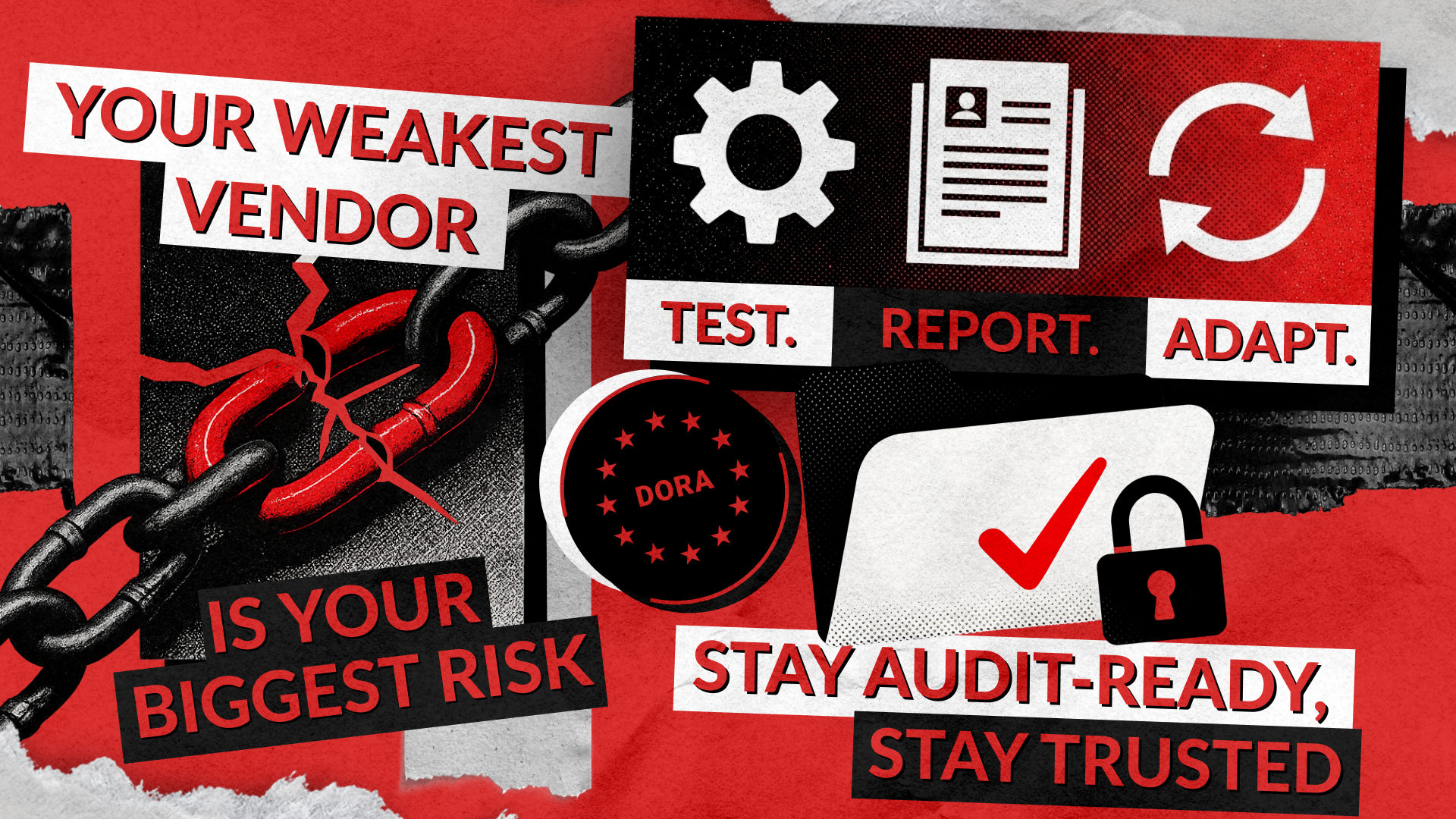
Everyone’s talking about DORA compliance requirements, but most folks still treat it like a riddle wrapped in red tape. Spoiler: it’s neither boring nor optional, especially if your business is anywhere near finance, banking, or the cloud software game in Europe.
The Digital Operational Resilience Act (DORA) is shaking up how we manage risk, trust our third-party tech, and keep financial data bulletproof. Want numbers? DORA now covers more than 20+ financial and ICT sectors, reaching everything from classic banks to crypto startups. If it’s not on your radar yet, it should be, unless you want to face a compliance conversation with zero punchlines.
We’ve been in the trenches since 2005, helping tech and finance companies stay resilient and audit-ready. Our DORA compliance consulting team has worked across fintech, crypto, and SaaS, guiding clients through risk management, incident reporting, and resilience testing with zero fluff.
In this article, we’ll break down the DORA compliance requirements, decode their impact on modern tech teams, and show how you can turn compliance into a genuine business edge — not just another rulebook.
What DORA Regulation Requirements Really Mean
Let’s call it: DORA is the first regulation actually designed for this decade’s headaches. The days of siloed ICT risk policies and “we hope nothing breaks” are gone. Every financial institution, insurer, fund manager, crypto provider, and their critical ICT vendors must continuously prove resilience — not just state it on a glossy slide.
DORA creates a shared set of rules for digital risk, cutting out the confusion of mismatched national laws and raising the bar for everyone.
Here’s why every tech founder and CTO should pay attention to DORA requirements:
- DORA’s scope is massive — you’re likely included. Whether you’re building banking apps, managing digital assets, or plugging into European financial APIs, the rules are for you.
- Compliance isn’t one-and-done. You need ongoing proof of operational resilience and risk management. Think monthly drills, not annual exercises.
- Noncompliance has teeth. Fines go up to 2% of annual turnover, and C-suites can get individual penalties.
Firms adhering to DORA compliance requirements are not only avoiding fines but also locking in clients who now demand third-party proof of resilience, not just a slick SLA (Service-Level Agreement). Plus, risk visibility boosts investor confidence, and nobody ever lost a deal for being too robust.
The Five DORA Pillars Explained
With the January 17, 2025, enforcement date behind us, meeting DORA regulation requirements is now a real-world task. Regulators want to see evidence of compliance, which centers on five key pillars that together guide how ICT risk is managed.
These pillars work together as a single framework, not just a list of tasks. When one area is strong, it helps support the rest, building a more resilient operation. Let’s look at each pillar in turn.
ICT Risk Management
ICT Risk Management is the backbone of DORA compliance requirements. This pillar calls for financial and tech organizations to proactively identify, assess, and reduce risks associated with their digital infrastructure. Instead of reacting to threats as they happen, your team needs to run regular risk assessments, update protocols, and ensure every information asset is covered by robust strategies and controls.
The goal is a holistic risk culture, where every role, from developer to C-suite, participates. Review frameworks yearly, update them after incidents, and keep internal audits independent. Well-managed ICT risk means your business can weather attacks, outages, and system failures without skipping a beat.
Incident Reporting
Incident Reporting turns chaos into clarity. DORA’s second pillar sets standard mechanisms for detecting, classifying, and escalating digital incidents. The rules are tight: if a breach or disruption threatens your operations, you must alert regulators and stakeholders fast, usually within hours, so there’s no time for panic or hiding details.
Structured reporting not only averts regulatory fines but also helps your team learn from each event. Every major incident needs post-mortem analysis, so you plug gaps, handle root causes, and adjust policies. Transparent reporting builds trust with clients and partners, ensuring a shared defense against recurring risks.
Resilience Testing
Resilience Testing means never trusting your luck. Under DORA, companies must simulate cyberattacks, system failures, and crisis scenarios to see how their systems survive. Think of it as regular fire drills for your tech stack: penetration testing, vulnerability scanning, and scenario-based exercises are the new normal.
Routine testing uncovers weak spots before they blow up. The findings guide improvements and force teams to adapt processes, upgrade infrastructure, or deepen training. For critical financial and tech organizations, resilience testing becomes essential for staying live and reliable, no matter how nasty the threat.
Third-Party Risk Management
Third-Party Risk Management prevents outside partners from becoming your downfall. DORA makes you accountable for every vendor or service provider that touches your tech, with no exceptions. From due diligence during onboarding to ongoing monitoring of SLAs, contracts, and contingency planning, this pillar is about controlling external exposure.
Critical vendors must match your ICT risk management standards and be ready to maintain security, uptime, and recovery under pressure. If a provider slips, you need plans to keep operating. By building and enforcing these requirements into contracts and relationships, your business stays resilient and regulator-proof — even when partners wobble.
Information Sharing
Information Sharing is your early warning system. DORA requires entities to join industry groups and platforms for sharing threat intelligence, attack data, and cyber risk insights. A crucial step is learning from the digital frontlines and keeping your defense one step ahead of the hackers.
Organizations must set internal procedures to securely distribute, use, and act on external threat data. The aim is to move fast: spotting new threats early, adjusting defenses, and helping the broader financial ecosystem stay strong. Smart information sharing limits damage, protects data, and boosts operational resilience for everyone involved.
To truly get a grip on DORA compliance requirements, it helps to break down each pillar, see exactly what’s expected, and understand why it matters in real life.
ICT Risk Management
Document all tech assets, classify risks, test policies quarterly
Stops blindspots, justifies trust to audit and clients
Incident Reporting
Notify regulators ASAP after a major event, keep logs, fix causes
Avoid fines, keeps Board and clients off panic mode
Resilience Testing
Run regular drills (not just audits!), plug discovered gaps quick
Validates real-world readiness
Third-Party Risk Mgmt
Track all vendors, renew due diligence, and formalize accountability
Ensures your weakest link doesn’t snap
Info Sharing
Get into sector sharing groups, update incident playbooks
Faster detection, sector-wide defense
How to Ace the DORA Compliance Checklist
Nobody wants another bland compliance checklist. This is your founder-approved, action-packed playbook for getting DORA right.
ICT Risk Management:
- Identify every asset and digital dependency. If you don’t know about it, you can’t protect it
- Document mitigation strategies, patch management, and regular board-level updates
- Implement and monitor multifactor authentication and encryption across your stack
Incident Reporting:
- Set up a structured, real-time incident detection and reporting process
- Notify regulatory bodies of major incidents in hours, not days
- Keep your clients and third-party partners in the loop, showing transparency and trust
Resilience Testing:
- Run scenario-based and threat-led penetration testing
- Use findings to fix gaps before a real breach
- Embrace “fail to learn” as your security culture
Third-Party Risk Management:
- Map and classify your vendors’ risk exposure, criticality, and contingency plans
- Build in continuous monitoring and document contract requirements for compliance, security, and reporting
- Always have a realistic exit strategy—if a critical provider fails, you stay standing.
Information Sharing:
- Participate in sector information exchanges to keep up with evolving cyber risks and attack vectors.
- Set up internal guidance for secure, privacy-conscious sharing of threat intel
Here are a few bonus tips:
- Review and update your ICT risk management docs.
- Keep a real-time “register” of all critical ICT suppliers and their risk posture.
- Freshen up incident response playbooks monthly, simulate a disaster, and iterate.
- Use continuous security testing—when in doubt, bring in outside testers for penetration testing audits.
- Formalize contracts, adding compliance and security as tracked KPIs.
- Share threat intelligence responsibly, not just to tick a box but as a learning tool team-wide.
If handling all these requirements feels like more than you want to juggle, we understand. That’s precisely why DORA compliance consulting and testing make perfect sense.
At QAwerk, we provide DORA compliance testing services to help you handle the details, allowing you to stay focused on growth. Having partnered with companies like the crypto asset management platform ICONOMI, the social commerce app ChitChat, and the neobank Zazu, we possess the hands-on industry expertise essential for understanding the unique nuances of your fintech business.
Value You Get from Mastering DORA Compliance Requirements
Getting DORA compliance right is a modern survival kit for tech-driven finance and every innovative business in the digital supply chain. Building actual operational resilience means fewer service disruptions, stronger deals, and happier clients who stay because your systems hold steady under pressure.
Embracing the DORA regulation requirements will futureproof your data, operations, and company reputation. DORA audit requirements force transparency and a focus on readiness, not reaction. Once the DORA compliance checklist becomes part of your routine, you’ll find it opens doors to bigger enterprise clients and makes boardroom risk conversations less scary.
And the other win? Your team gets clear guidance and accountability — no more scrambling when an incident or audit hits. If you ever want the shortcut, contact QAwerk for DORA compliance testing and consulting. Let the regulation be the lever that tightens your tech and builds trust that lasts.
See how we optimized onboarding flows for a crypto asset management platform, reducing user drop-off by 15%