
When a CEO asks what the QA budget buys, “we found a lot of bugs this quarter” is the weakest answer available, because it makes every calm sprint look like wasted money. The objectives of software testing are to reduce the risk of releasing poor-quality software and to give the people making release decisions reliable evidence. Finding defects is one of those objectives. The others include verifying requirements, validating that the product does what users need, confirming regulatory compliance, preventing regressions, and building justified confidence to ship.
The cost of getting it wrong keeps climbing. IBM and the Ponemon Institute’s Cost of a Data Breach Report 2026 puts the global average cost of a data breach at $4.99 million, a 12% increase over the previous year and a record high. This guide covers the standard objectives testing is built around, the ones that matter more than the bug count, and how to tell whether your testing is meeting them, whether it runs in-house or through outside software testing and QA services.
The Standard Objectives of Software Testing (ISTQB-Aligned)
The International Software Testing Qualifications Board (ISTQB) publishes the syllabus most QA engineers are certified against. Its Certified Tester Foundation Level syllabus lists nine typical test objectives, and only one of them is “causing failures and finding defects.” The full set groups into four jobs:
- Improve quality before it ships. Evaluate work products (requirements, user stories, designs, code) and trigger failures so defects get fixed while they are still cheap.
- Verify the build matches the spec. Check that specified requirements have been fulfilled and that the required coverage of the product has actually been tested.
- Validate the product meets user needs. Confirm the software is complete and works the way stakeholders expect, which is a different question from whether it matches a document.
- Reduce risk and inform decisions. Lower the risk of inadequate quality, confirm compliance with contractual, legal, and regulatory requirements, give stakeholders the information to make release decisions, and build confidence in the product.

Verification and validation both depend on something to test against. Requirements are the input to testing and objectives are its output, which is why a vague spec produces vague results. If your team struggles at that stage, our guide to software testing requirements covers what you need in place before testing starts.
The ISTQB syllabus also says objectives vary with context: the product, the test level, the risks, the development lifecycle, and business factors such as time to market. A payments API and an internal dashboard should not be tested toward the same goals.
Goals of Software Testing Beyond Finding Bugs
The standard list is accurate, but it reads like a checklist. In practice, four goals decide whether a testing program earns its budget, and none of them show up in a bug count.
Confidence to Ship
A release decision is a bet. Good testing turns “we think it works” into “we checked the flows that make money, on the devices our users own, and here is what is still open.” An engineering lead with that picture can separate acceptable known issues from blockers and hold the release date. Without it, teams either delay releases out of caution or ship and hear about problems from customers.
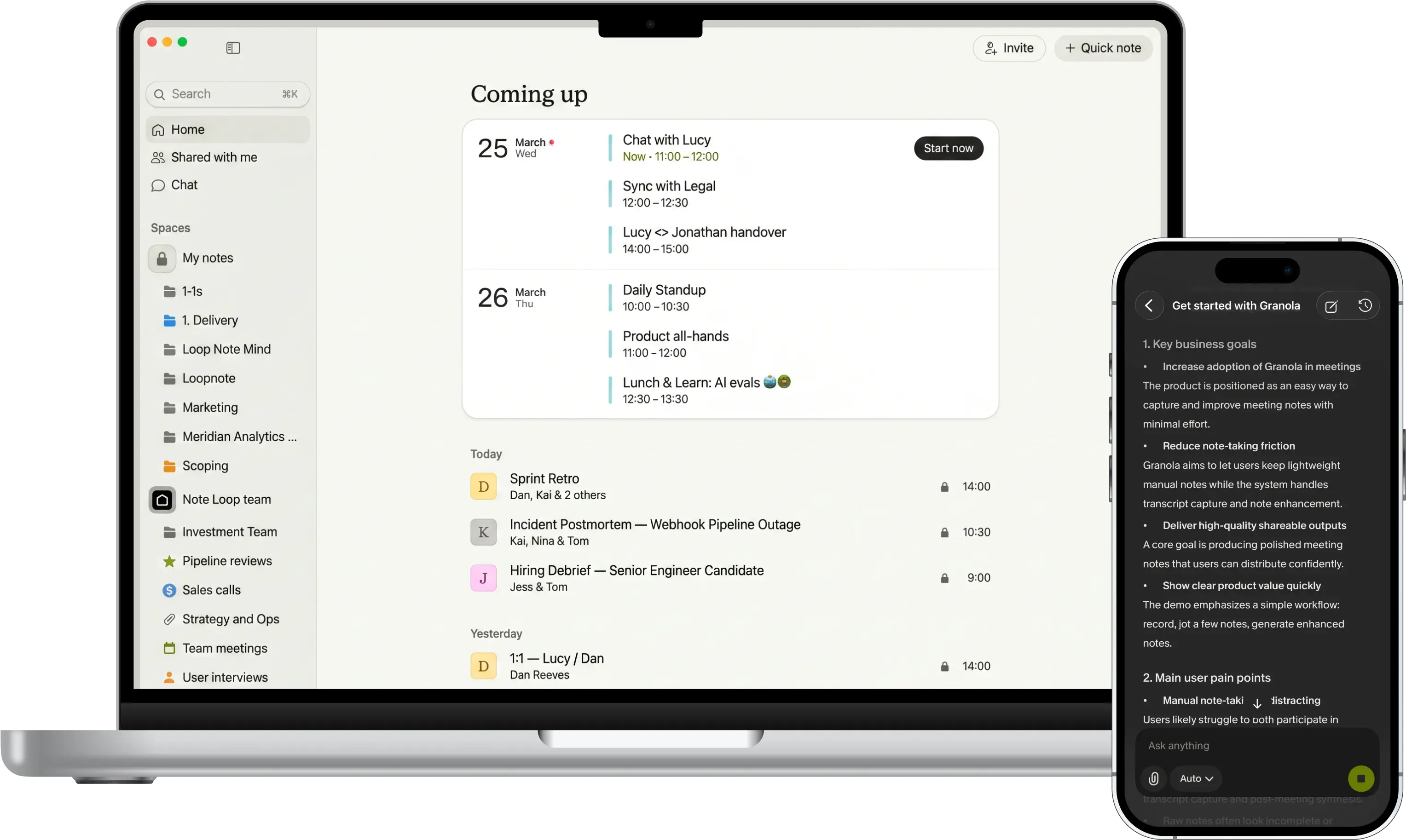
Confidence to ship matters most for teams on frequent release cycles. Granola, the AI notepad for people with back-to-back meetings, releases weekly across macOS, Windows, and iOS. QAwerk built more than 1,100 test cases, automated 76% of the core regression suite, and caught over 200 bugs before they reached Granola’s users. With workspace management, permissions, and cross-account sync thoroughly tested, Granola could expand from a personal note-taking tool into the enterprise market with confidence.
Evidence for Stakeholders
Product, sales, support, compliance, and investors all need to know whether the product is ready, and most of them cannot read a test log. A testing objective that often goes unstated is translating technical status into something a non-technical stakeholder can act on: what was tested, what passed, what risk remains, and what it would take to close it. When that evidence is missing, release conversations turn into opinion.
Regression Prevention
In a mature product, many production incidents come from changes that broke something that used to work. A new checkout step breaks saved payment methods, or a library upgrade changes how dates render in one locale. Preventing that is a standing objective that never finishes, and it is where a maintained regression testing suite pays for itself: every release gets checked against everything the product already promised users.
Learning How the Product Actually Behaves
Exploratory testing shows how the product behaves under conditions a spec rarely describes: a slow network, an interrupted payment, a user who taps “back” in the middle of onboarding. Those findings feed product decisions as much as bug fixes, and they are often the most valuable output of a test cycle.
Why Is Software Testing Important? The Business Risks It Covers
For a non-technical decision-maker, the case for testing rests on business outcomes. Three risks sit on the testing team’s list alongside functional correctness.
Brand reputation. A single defective release can reach millions of people before anyone can roll it back. In July 2024, a faulty CrowdStrike content update affected about 8.5 million Windows devices, according to Microsoft’s estimate reported by Bloomberg, grounding flights and disrupting hospitals. Most products will never fail at that scale, but the mechanism is the same for a SaaS release that locks customers out of their accounts for a few hours: the cost lands on the brand, and on engineering.
Market timing. Testing that runs alongside development protects a launch date, because problems surface while there is still time to fix them without moving the calendar.
Compliance. For regulated products, meeting a legal or platform requirement is a testing objective in its own right. The EU’s Digital Operational Resilience Act (DORA) requires financial entities to test their digital operational resilience, and an app that fails Apple App Store or Google Play review does not launch at all. Checking those requirements before an auditor or a reviewer does is the job of software compliance testing.
How to Know If Your Testing Is Meeting Its Objectives
A falling bug count can mean better code or weaker testing, and the number alone cannot tell you which. Measure each objective by the question it answers for the business:
Find defects early
Are problems caught before users see them?
Most severe defects are found before release, few escape to production
Whether the defects found were the ones that mattered
Verify requirements
Did we build what we specified?
Every requirement traces to at least one test with a current result
Untested requirements do not generate bugs
Validate user needs
Does it work the way users expect?
Few usability complaints and support tickets after launch
A product can pass every test and still confuse users
Prevent regressions
Did this release break anything that worked?
Stable regression pass rate, low rate of changes that need a hotfix
Old features breaking silently between cycles
Reduce business risk
What could hurt revenue, reputation, or compliance?
Risks are ranked and the top ones have test coverage
Risk that was never tested produces zero bugs
Inform stakeholders
Can we make a release decision with confidence?
Release decisions are made from a clear status report on schedule
Whether anyone outside QA can use the results
Post-release incidents, escaped defects, and the share of releases that need a hotfix are usually the clearest outside signals that testing is working. Our breakdown of the most important software test metrics covers how to calculate and track them.
When Your Testing Objectives Should Be Different
Chasing every ISTQB objective at full depth is the wrong call for many products. A prototype with a few hundred beta users mostly needs to learn how people use it, and a heavy regression suite would slow down a product that changes shape every week. An internal admin tool used by five colleagues does not need the same compliance evidence as a payments flow.
Rank objectives by what a failure would cost. For a regulated fintech app like Thirdfort, compliance and risk reduction lead. For a consumer app in a crowded category, user validation and regression prevention usually matter most. For a dev-tools product with technical users, requirements verification and API reliability tend to come first. If you already know your priorities and your process is the gap, these seven ways to improve software testing are a practical place to start.
How QAwerk Approaches Testing Objectives
A QAwerk engagement is shaped around what testing has to achieve on your product, and our reporting covers those objectives in terms your stakeholders can use, alongside the defect list. We join a project at whatever stage it is in, whether that is a spec that still needs reviewing, a build two weeks from launch, or a mature product with an aging regression suite, and our engineers work as part of your team, in your tools and channels.
The results show in two numbers: products tested by QAwerk are used by more than 110 million people, and 95% of our clients stay with us. If your testing program is measured only by bugs found, it is measuring the smallest part of what testing delivers. A dedicated QA team that ramps up fast and reports against your real objectives is the quickest way to change that. Talk to us about your testing objectives.
FAQ
What are the main objectives of software testing?
The main objectives are to find defects before users do, verify that requirements are met, validate that the product meets user needs, reduce the risk of poor quality, confirm compliance with legal and regulatory requirements, and give stakeholders the information they need to make release decisions with confidence.
What is the difference between goals and objectives of software testing?
The terms are often used interchangeably. When teams separate them, goals describe the broad outcome (confidence that a release is safe to ship) and objectives are the specific, checkable targets that support it, such as full coverage of the checkout flow or zero open critical defects at release.
Why is software testing important for a business?
Software defects cost money through lost revenue, support load, emergency fixes, and reputational damage, and in regulated industries through compliance failures. Testing lowers those risks and gives leadership evidence to decide when a product is ready to release.
Can software testing prove that a product has no bugs?
No. The ISTQB syllabus lists “testing shows the presence, not the absence of defects” as a core testing principle. Testing reduces the probability that defects remain and shows where the product is reliable, which is why coverage and risk ranking matter more than a final bug count.
How do you measure whether testing objectives are met?
Track signals tied to each objective: escaped defects and post-release incidents for defect detection, requirement traceability for verification, support tickets and usability feedback for validation, hotfix rate for regression prevention, and whether stakeholders can make release decisions from the test report.
See how we built and maintained 1,100+ test cases for Granola, an AI notepad, and automated 76% of its regression suite