Today, we’ll talk about penetration testing myths and how believing in them might compromise your system’s defenses and, ultimately, lead to your business’s ruin. The dangers of cyberattacks are real, and you must have the best defenses you can afford.
Below, QAwerk’s security and pentesting experts explain common misconceptions about these fields and offer guidance on how to protect your systems effectively, regardless of the size of your business.
Top 8 Penetration Testing Myths Vs. Realities
With so many penetration testing misunderstandings today, it was hard to pick a few to focus on. We’ve chosen based not only on the level of how ‘common’ the misconception is, but also considering how dangerous the consequences of these misguided beliefs are.
Myth 1: Penetration Testing Is a One-Time Activity
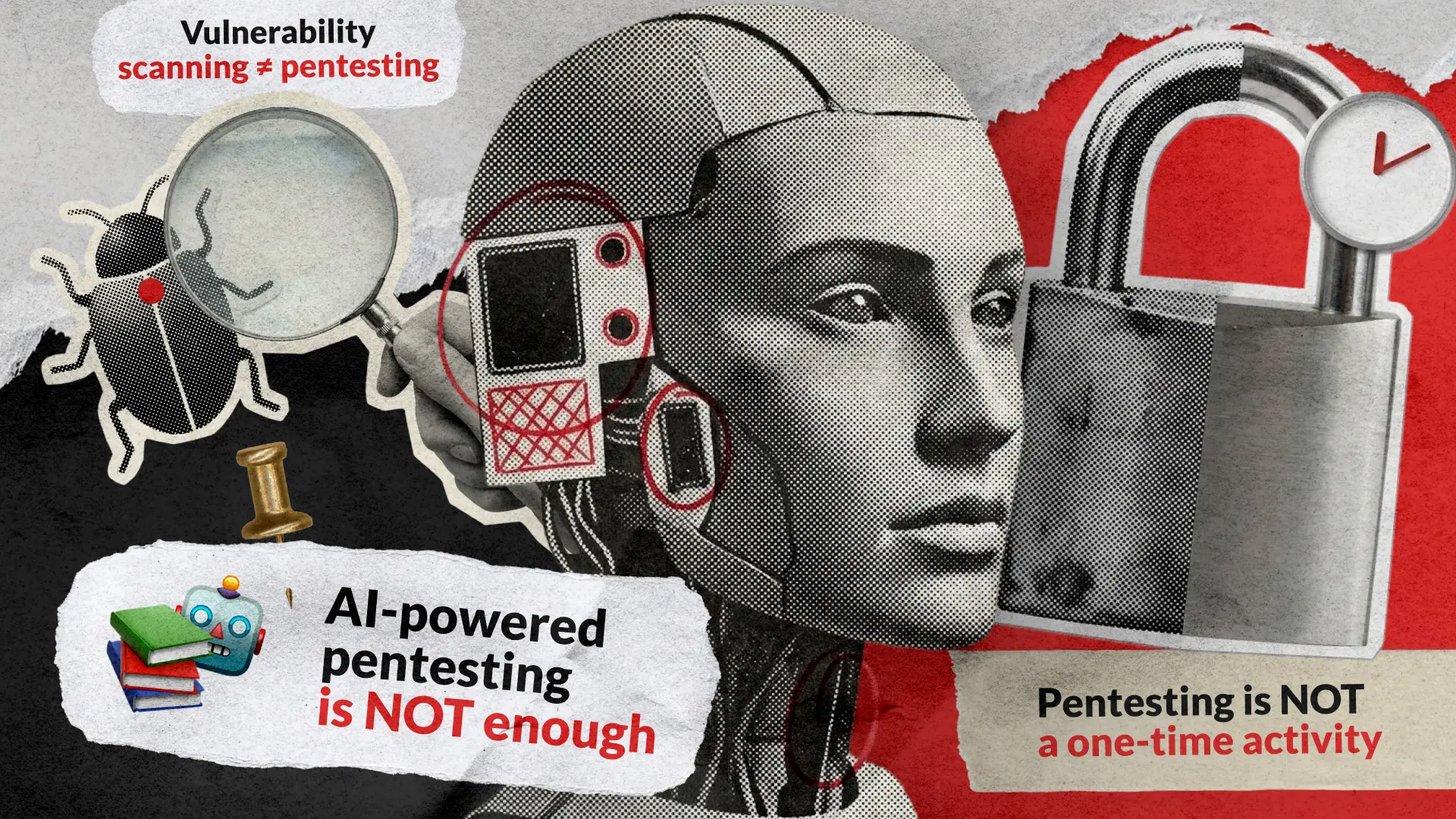
This is probably the most common penetration testing misconception. People tend to believe that you only need to run this kind of testing once before release, or at most once a year. However, the reality is not as kind: cyber threats evolve extremely quickly, and so do attack surfaces. Just imagine: about 130 new CVEs (Common Vulnerabilities and Exposures) were reported daily in 2025. Therefore, it’s imperative to build a flexible defense system that can adapt in real-time.
Truth: Penetration testing frequency is determined by multiple factors, including your industry, company size, threat level, technology changes, and incident history. You should work closely with experts to integrate a pentesting schedule into your overall security strategy, since it covers only one aspect of your system’s defenses.
Gradual security decay between tests is inevitable. Therefore, you must not let yourself become complacent, and remember that this testing must be guided by change, not by the calendar.
Myth 2: Compliance Testing Means We Don’t Need Penetration Testing
There are quite a few penetration testing misunderstandings related to compliance and verification. In many cases, people believe that if they pass, for example, PCI DSS or DORA compliance, they are safe from attackers. Sadly, this isn’t true at all. However, it must be noted that to appease regulators, your systems must be highly secure, and pentesting is mandatory as part of the audit.
Another side of this misconception is that people often believe that pentesting is only a compliance exercise. Therefore, it isn’t necessary if your business doesn’t require regulatory audits.
Truth: Compliance frameworks only define checklists with minimum controls. It means that even if you meet all the regulators’ requirements, the real-life attack threat is much higher. Therefore, your security scope must exceed the minimal checklist, which includes regular testing against evolving threats. Comprehensive pentesting plans are integral for this.
To get a sense of how imperative it is to cover every angle, not just those defined by compliance, remember the Target data breach that compromised 40 million credit and debit cards and 70 million customers’ personal information. In that case, attackers penetrated the system through a third-party HVAC vendor (according to the US Senate investigation).
Myth 3: Vulnerability Scanning = Pentesting
One of the most common penetration testing misconceptions is that vulnerability scanning is equal to it for ensuring your system’s security, but it’s entirely false. You can use automated pentesting tools to save time and boost efficiency. However, regardless of how helpful these solutions are, they cannot replace comprehensive penetration testing performed by experienced professionals.
Truth: In order to build up adequate defenses, you must use vulnerability scanning as a way to identify potential weaknesses and penetration testing to exploit them safely. This way, you can evaluate the real-life impact of such an attack. Both steps are part of comprehensive security testing services.
To get some perspective, remember the Equifax breach caused by an unpatched vulnerability. In that case, the scanner identified the vulnerability, but the organization failed to validate the risk and take the necessary remediation steps. As a result, private records of over 150 million people were compromised. It’s a stark reminder that your security approach must be comprehensive, including immediate remediation and validation.
Myth 4: Pentesting Is Disruptive to Business Operations
Many businesses are under the misconception that pentestiing will cause real data losses and outages that will directly affect their business. Surprisingly, it’s one of the most common penetration testing myths, largely due to business owners’ misunderstanding of good testing practices.
Truth: Professional-level penetration testing is scoped and fully controlled. It’s carried out in a planned manner, using only safe exploitation techniques, with predefined rules of engagement. All this is done specifically to prevent any disruptions.
Myth 5: Small Businesses Don’t Need Pentesting
The belief that being a small business makes you safe from attacks because you are less interesting to criminals is one of the most dangerous penetration testing misconceptions. You are never too small to be targeted.
Truth: Attackers are, in fact, more interested in small and medium businesses because their defenses are inherently lower. Therefore, by not taking cybersecurity seriously, you are making it even easier for criminals to gain access to your systems. As in the case of the Target breach mentioned earlier, your vulnerability might even open the door to your larger partners’ defenses. Over 40% of all cyberattacks today target SMBs, and criminals are usually successful in those attacks. As small and even medium-sized businesses will feel the damage keenly, there is a big risk of a complete shutdown after even one such incident.
Therefore, do not take any unnecessary risks. Penetration testing services can be affordable. Contact QAwerk today to get a quote. We can develop a security testing plan for your needs and budget.
Myth 6: AI-powered penetration testing is enough
There are some fantastic AI-powered penetration testing tools today that can automate and speed up many tasks. Implementing them will help increase your web application security while saving you money. However, technology is not yet advanced enough for LLMs to replace human expertise completely.
Truth: You can use AI-powered tools to enhance automated testing, increasing its coverage and speed. However, to achieve the best results, you should always combine this approach with manual testing by QA professionals. Their expertise is crucial for identifying logic flaws and designing creative attack chains. In addition, only humans are currently capable of contextual risk judgement. It’s also more secure to offer authorization bypasses for a select group of humans than to a machine. Finally, humans are essential for prioritization and for building and implementing personalized plans aligned with your business goals.
Myth 7: Regular Penetration Testing Means We’re Invincible
False assumptions like this one are among the more dangerous penetration testing myths. If you are among those who believe that pentesting equals security and will ensure you are 100% protected, you might not fully understand how cybersecurity works. It’s an exceptionally complex field, and testing is but one of its many components. By thinking otherwise, you run the risk of blaming tests for any issues that you might face, especially if your business is attacked. The danger in this case lies in the fact that you might miss the actual weakness that allowed the incident.
Truth: Penetration testing reduces risk, improves visibility, and strengthens your defenses overall. However, this tool cannot replace a cybersecurity system entirely. Make sure your expectations are realistic, and you’ll be able to use your security budget much more efficiently.
Myth 8: We’ve Fixed the Issues Pentesting Found, So We’re Fine
It’s essential to implement full-scale remediation once test results are available. However, you mustn’t let such penetration testing misconceptions lull you into a false sense of security because threats evolve constantly.
Truth: Ensuring your business security requires continuous effort. Therefore, you must build a system of dynamic defenses and vulnerability scanning that remains active 24/7. Remediation is a part of the strategy. However, even when you ensure all previously discovered gaps are closed, there is a risk of a new one opening as criminals use more sophisticated attack tools.
Beyond Penetration Testing Misconceptions: How to Do It Right
As you can see, there are many penetration testing myths. The majority of them stem from the fact that people who don’t specialize in this area have some misconceptions about the place of this element in a comprehensive cybersecurity strategy.
To help you fix this issue right away, QAwerk experts share a simple, high-level roadmap that explains how to build one.
- Define the risks and scope of the system by answering the questions: what matters most to your business, and what data must be secured above all else.
- Build a vulnerability management routine that includes regular scanning, patch management, and asset inventory.
- Include penetration testing that covers external areas (internet-facing), internal areas (assume breach), APIs, cloud configuration, and web application testing.
- Build a system that combines automation power and human expertise to manage tasks effectively.
- Run all tests after every change, and build a regular verification schedule.
- Create a ‘fix, retest, and verify’ routine to ensure your remediation efforts are effective.
- Manage security governance covering findings reports, risk tracking, and change analysis.
The most important thing to remember about penetration testing is that its main goal is to serve as a risk-management discipline. This type of service allows your business to understand the dangers and how to protect against them before you face them in the real world, such as hacking attacks.
QAwerk pentesting professionals have years of experience in running such tests and building strategies for effective defenses. If you don’t want to lose any time in protecting your business, contact us today.
See a sample of our security code review for a US-based e-commerce platform.